
Rent Accounting for ASC 842: Prepaid Rent, Journal Entries, and More
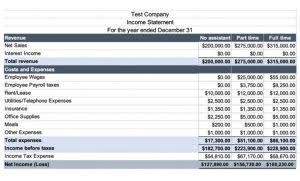
Under accrual accounting, this company would record a prepaid rent asset of $120,000. Each month, $10,000 would be expensed, reducing the prepaid rent asset and recognizing the rent expense in the income statement. This methodical approach ensures that the company’s financial statements accurately reflect the economic reality of the lease agreement. Accrual accounting plays a pivotal role in the management of prepaid rent, which is a common scenario in business operations. This accounting method allows for a more accurate representation of financial position and performance, especially when it comes to the allocation of expenses and revenues over time. Prepaid rent, essentially a payment made for rent before the rental period has occurred, is recorded as an asset on the balance sheet under accrual accounting.
Prepaid Rent and Deferred Rent
When a prepayment is made for rent, the company records it as an asset on its statement of financial position along with other prepaid expenses in the current assets section. This prepayment gets recorded as an expense on the company’s income statement once the period for which the prepayment was made elapses. Before we discuss prepaid rent as debit or credit, let us have a look at what it means. The accounting for prepaid is prepaid rent debit or credit rent involves making a journal entry that debits the prepaid rent asset account and credits cash or bank. As the rental period progresses, an adjusting entry is made to amortize the prepaid rent. As each month passes, a portion of the prepaid rent is recognized as an expense.
How Are Prepaid Expenses Recorded on the Income Statement?
Going forward, a monthly entry will be booked to reduce the prepaid expense account and record rent expense. Additionally, deferred rent is also recorded for lease agreements with escalating or de-escalating payment schedules. Prepaid rent is a common accounting transaction that must be tracked and recorded correctly in order to ensure the accuracy of financial statements. Prepaid rent is simply the payment of rent in advance, which is considered an asset on the balance sheet and should QuickBooks be recognized as an expense in the future. By tracking this type of expense, businesses can ensure that all expenses are properly accounted for and their financial records remain free from errors.

Example two: Yearly prepaid rent payment
By the end of the lease, the balance in the deferred rent account will be zero. The amount recognized as an expense corresponds to the prepayment portion utilized during the specific period. It’s common for the tenants to receive the rent in advance, which can be monthly, semi-annually, annually, or as agreed between the contract parties. Each month, an entry similar to the one above will be made by the brewery to account for the rent Medical Billing Process which has been expensed at the end of that month. The monthly payment of $18,600 is multiplied by the number of months (12) to arrive at the total amount of $223,200 which is paid by the brewery. The trial balance of Amar Ltd. shows the rent amounting to 4,500 as a prepayment for April.
Rent Payments: Rent Payments: The Accounting Behind Prepaid Expenses
These payments are recorded as assets on the balance sheet until they are used or consumed, at which point they become expenses on the income statement. So, it involves recording the financial transactions that show the debit and credit accounts affected. The process of accounting for prepaid rent involves specific journal entries that capture the initial transaction and the subsequent monthly recognition of rent expense.
- Companies can leverage prepaid rent agreements to negotiate better rates, possibly enjoying discounts for paying early.
- The landlord requires that Company A pays the annual amount ($120,000) upfront at the beginning of the year.
- Usually, the current assets include items that can be converted into cash within 12 months.
- These expenses are not initially recorded on a company’s income statement for the period when the money changes hands.
- The prepaid expenses will be adjusted in the next couple of months within the operating year hence it is a current asset.
- The accounting for prepaid rent involves making a journal entry that debits the prepaid rent asset account and credits cash or bank.
Create a free account to unlock this Template

The company has recorded rent expense for the first two months of the quarter but they have an accrual for the payment. We have discussed prepaid rent, the nature of economic transactions such as debit or credit, the balance sheet, income statement recording, and financial reporting. Besides, the current assets in the balance sheet are decreased as the prepaid rent is not an asset anymore. Suppose the entity has paid rent for six months and prepares financial statements on a monthly basis.
Our Company
These entries are fundamental to maintaining the integrity of financial records and ensuring that the financial statements accurately reflect the company’s economic activities. As each month passes, one rent payment is credited from the prepaid rent asset account, and a debit is made to the rent expense account. This process is repeated as many times as necessary to recognize rent expense in the proper accounting period. Accounting for prepaid rent doesn’t have to be complicated, but it does require attention at month-end-close. In a basic general ledger system, an accountant or bookkeeper records a prepaid asset to a balance sheet account. This may require an adjusting entry to reclass rent expense to a prepaid account.

Hence, the company needs to record rent expense for the period as the expiration cost of the prepaid rent occurs. Consistent with the matching principle of accounting, when the rent period does occur, the tenant will relieve the asset and record the expense. A typical scenario with prepaid rent is mailing the rent check early so the landlord receives it by the due date. By applying the present value (PV) formula or a PV calculator, the PV of the remaining payments is determined to be $65,028. It is important to note that in this calculation, the first period is accounted as ‘zero’ in the annuity/cash flow.